How to Compare Foil Containers Honestly: A Buyer's Guide to Weight and Quality
In the foil packaging market, a lower price isn't always a better deal. Two containers can look identical on the shelf yet differ by 15% or more in the amount of aluminium they contain — and you often only discover the difference when they buckle in the oven, leak in transit, or run out faster than you budgeted for.
Because foil containers are largely unbranded, it's easy to compare on price alone and assume you're getting like for like. You're often not. Here's how to compare foil packaging honestly, and what to check before you switch suppliers to save a few cents.
What Actually Defines Quality in Foil Packaging
In our industry, quality comes down to two things: consistency and material weight (measured in microns, or gauge).
Consistency means every container in every carton performs the same way — the same strength, the same fit with its lid, the same behaviour in the oven or freezer. Material weight determines that strength. A heavier-gauge container holds its shape under a full load, seals properly, and survives handling and transport. A lighter one may look the same but flexes, tears, and fails when it matters.
The difference is invisible on the shelf. You cannot see microns. That's exactly why it's so easy to be caught out.
The Two Things a Cheap Price Can Hide
1. Down-gauging. This is the practice of reducing the thickness of the aluminium to cut cost. A container advertised at a certain size may be produced with less material than a genuine equivalent. It looks the same, stacks the same, and costs less — until it fails under the weight of the food it's supposed to hold. Down-gauging is one of the most common ways cost is quietly stripped out of a product without the buyer's knowledge.
2. Capacity mismatch on imports. Imported containers are often manufactured to international size standards that don't match established local volumes. A container sold as a familiar size may actually hold less than the local equivalent it's replacing. If you switch based on the label alone, you can end up serving smaller portions, needing more units per job, or confusing your own customers — all while thinking you bought the same thing for less.
How to Protect Yourself: A Buyer's Checklist
Whenever you compare foil containers — especially against an unfamiliar or imported product — run these four checks:
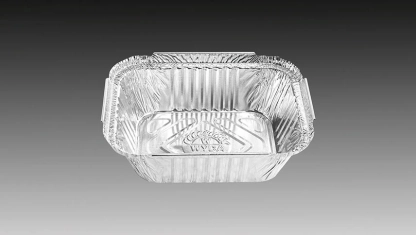
- Compare weight per unit, not just price per unit. The weight of the container tells you how much aluminium you're actually buying. Two containers at the same price mean nothing if one weighs noticeably less — that's down-gauging in plain sight.
- Check actual capacity against the local size you're replacing. Don't trust the label alone. Confirm the real volume matches what you currently use, so you're not quietly downsizing your portions.
- Ask for the micron or gauge specification. A supplier confident in their product will share it freely. If a supplier can't — or won't — tell you the material weight, treat that as your answer.
- Verify food-safety certification. Aluminium in direct contact with food should be manufactured under a recognised food-safety standard. Ask which one, and who audits it.
Why Wyda Publishes the Weight of Every Product
Most suppliers in this market don't tell you what their containers weigh. We do the opposite.
The weight per unit is published on every product page on our website — openly, for every size we make. We do this for one reason: so you can run a true like-for-like comparison. When you can see the weight, you can see exactly what you're buying, and you can hold any other quote up against a real number instead of a guess.
It's a simple test of transparency. We show our numbers. If another supplier won't show theirs, it's fair to ask why.
Certifications That Back It Up
Transparency only means something if the quality behind it is independently verified. Wyda's manufacturing is certified to standards that are audited by third parties, not self-declared:
- Kosher. Certified for compliance with kosher requirements, giving confidence to customers who serve kosher markets.
- Halaal. Certified halaal, supporting customers who supply halaal food producers and retailers.
- Proudly South African. A member of Proudly South African — our products are manufactured locally, supporting local jobs and a dependable domestic supply chain.
Buy on Value, Not Just Price
A cheaper container that holds less, weighs less, and fails more often isn't cheaper at all — it costs you in waste, replacements, and customer complaints. Real value is consistency you can rely on, order after order.
That's what Wyda stands for: consistent, reliable, honestly specified foil packaging, manufactured locally to certified standards. Compare us openly — that's exactly why we publish our numbers.
Browse our aluminium foil container range to see the specifications for yourself, download our catalogue, or get in touch to discuss your requirements and request a like-for-like comparison.
Posted on 27/07/2026